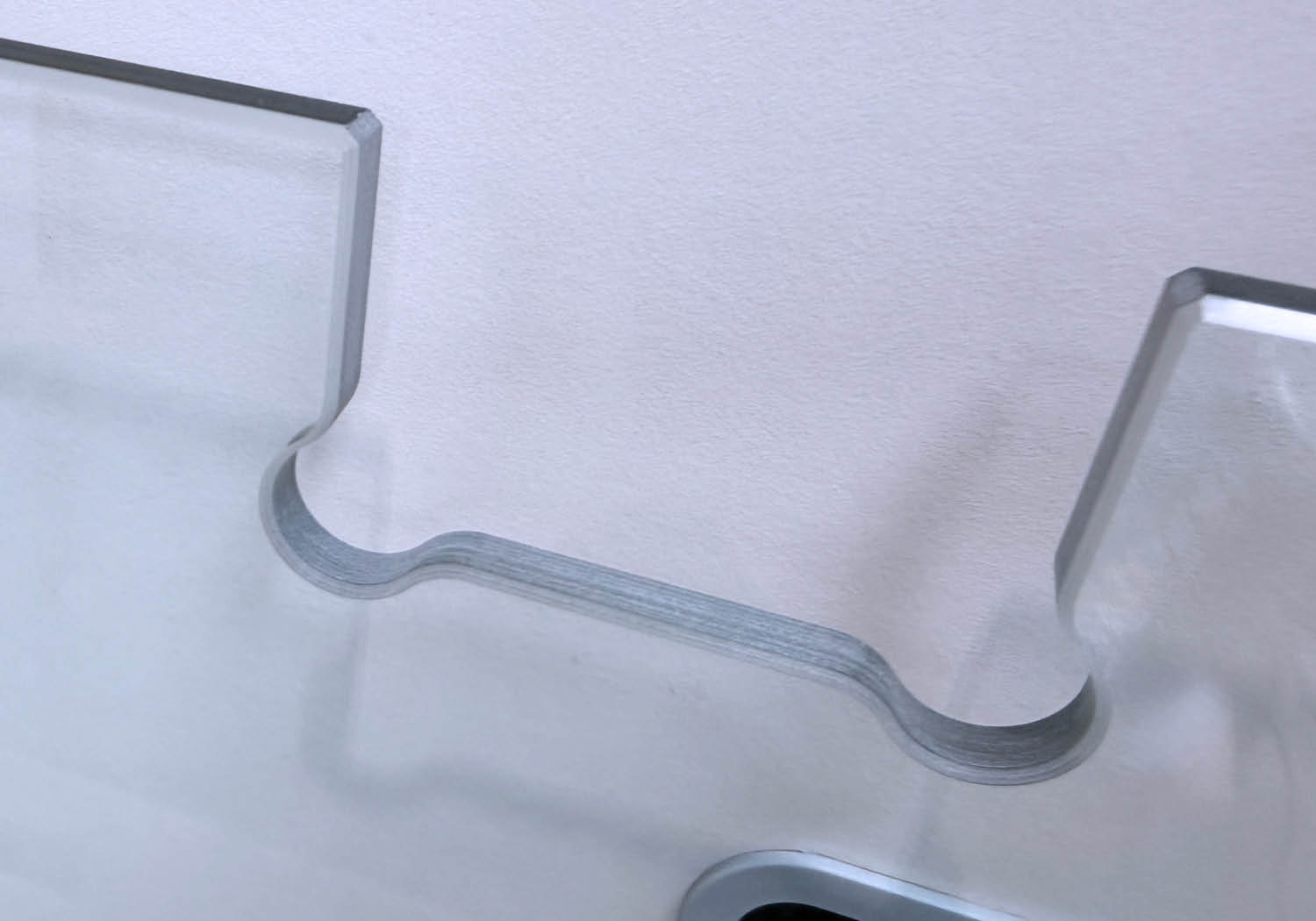
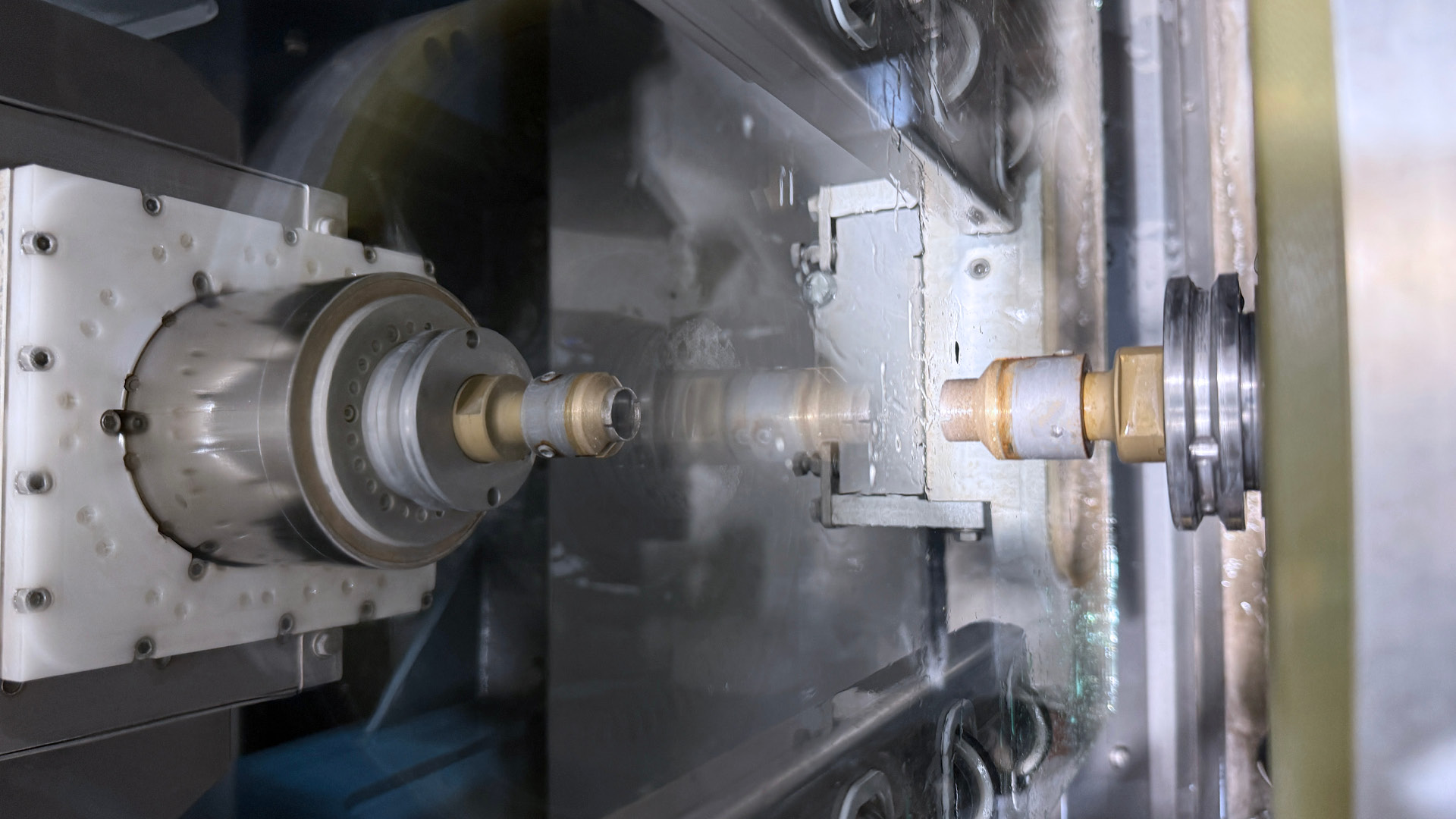
Helix Drilling and Oscillating Milling in Glass Processing

Higher Process Reliability and Longer Tool Life

Quick Summary: The systron proMD Milling & Drilling Centre combines conventional drilling, Helix Drilling, Oscillating Milling, patented Water Cushion Technology and internal cooling for the precise machining of glass, laminated glass (LG) and ceramics. The result is higher process reliability, longer tool life and greater flexibility in glass machining.

Glass drilling is one of the most common machining operations in CNC glass processing. Drilling laminated glass (LG), however, presents additional challenges. Conventional drilling processes often require multiple drilling steps or cooling interruptions to prevent excessive heat generation. This increases machining time and accelerates tool wear. Insufficient cooling also increases thermal and mechanical stress, raising the risk of glass breakage.

Another challenge is the need for special drilling tools to produce specific hole diameters. These tools are expensive, often have long delivery times and are rarely used again once a project has been completed.

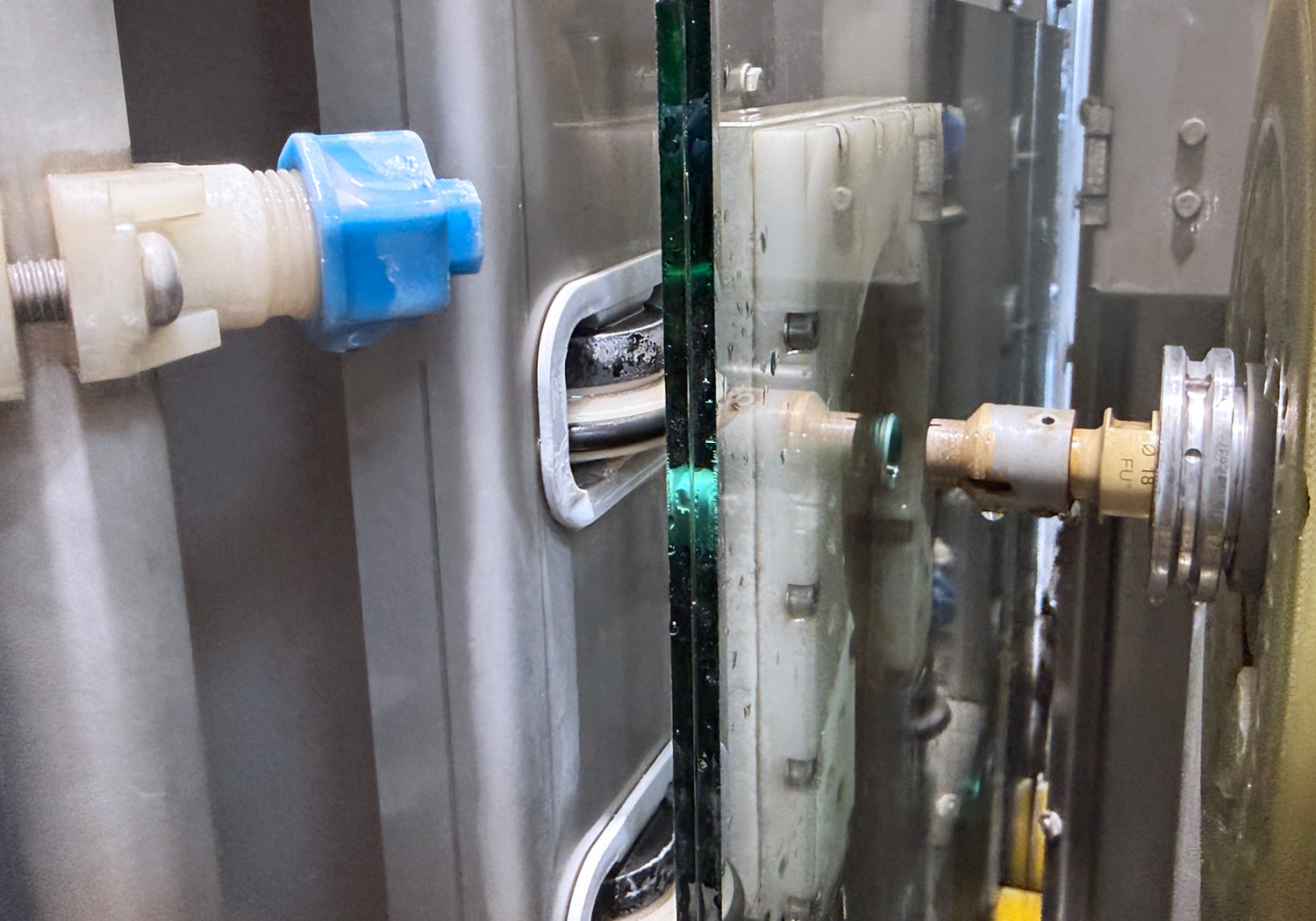
With the systron proMD Milling & Drilling Centre, systron follows a different approach. In addition to conventional drilling, the machine is equipped as standard with Helix Drilling Technology, combined with floating glass clamping using the patented Water Cushion Technology. The combination of Helix Drilling Technology and the patented Water Cushion Technology is a unique feature of this glass processing centre.

The result is a significantly more stable and reliable drilling process for both standard drilling operations and demanding glass applications. Different hole diameters can be produced with a single tool, eliminating unnecessary tool changes and reducing tool inventory.

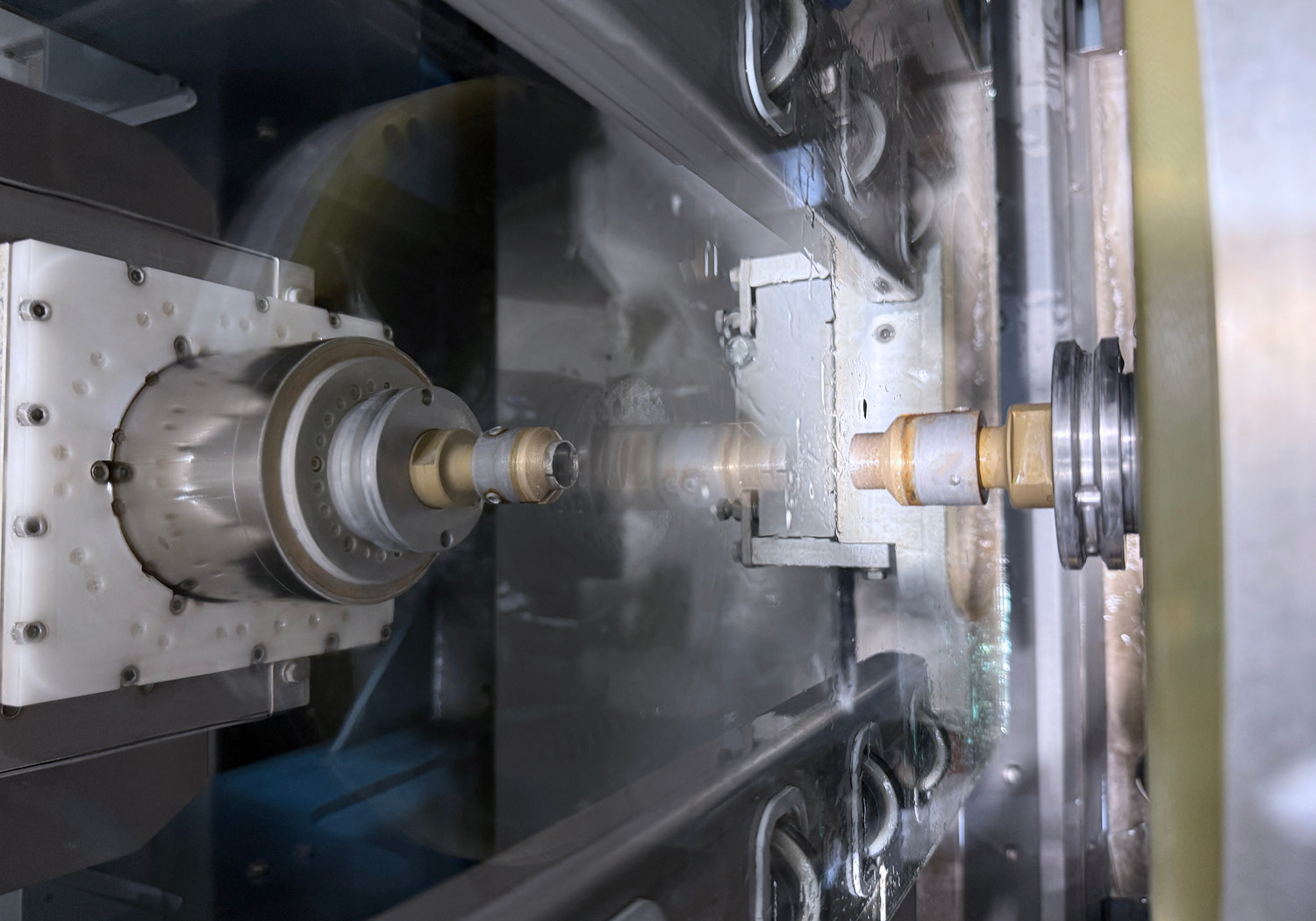
The systron proMD is equipped with front and rear machining spindles, allowing drilling and countersinking operations to be performed from both sides of the glass.
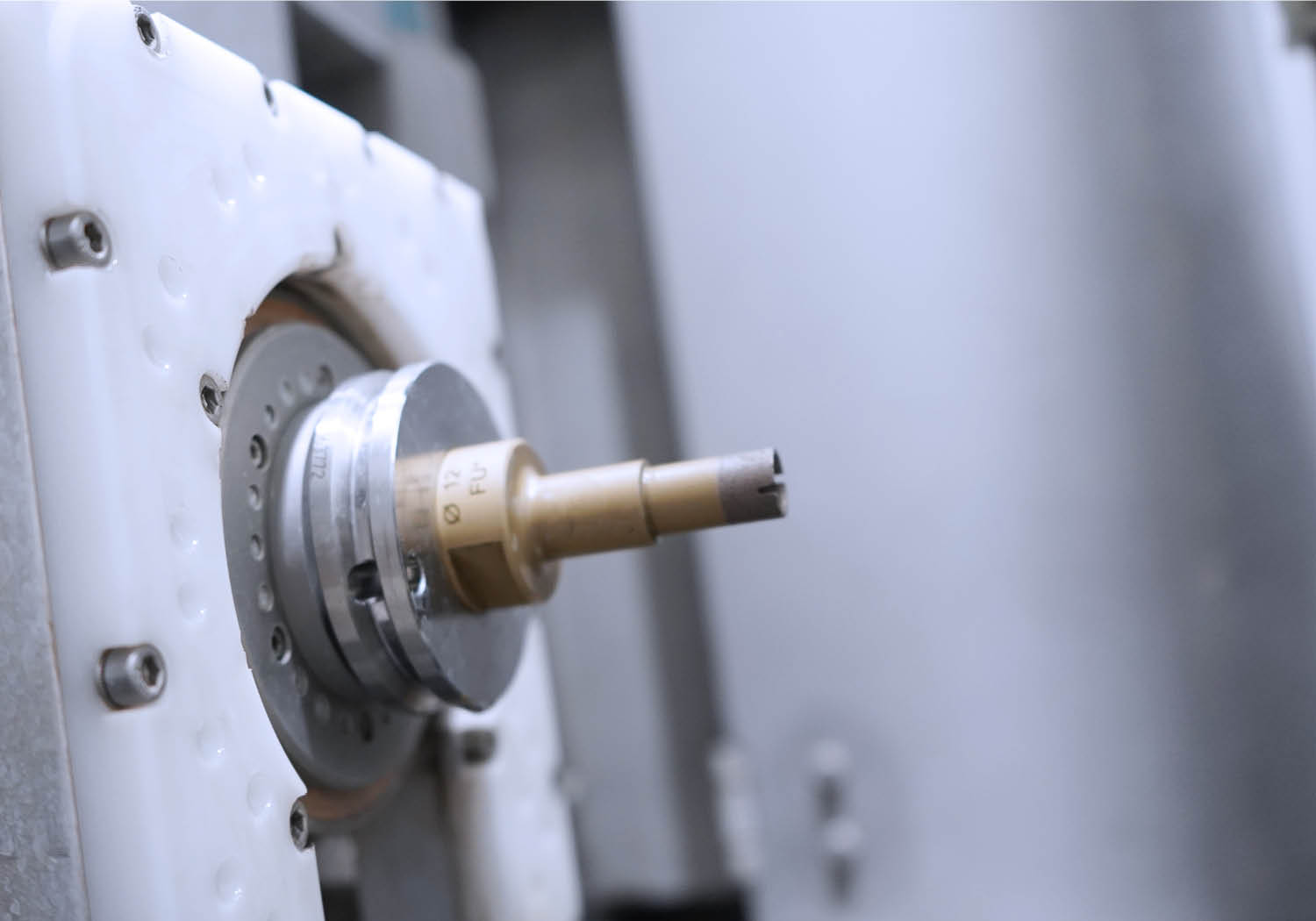
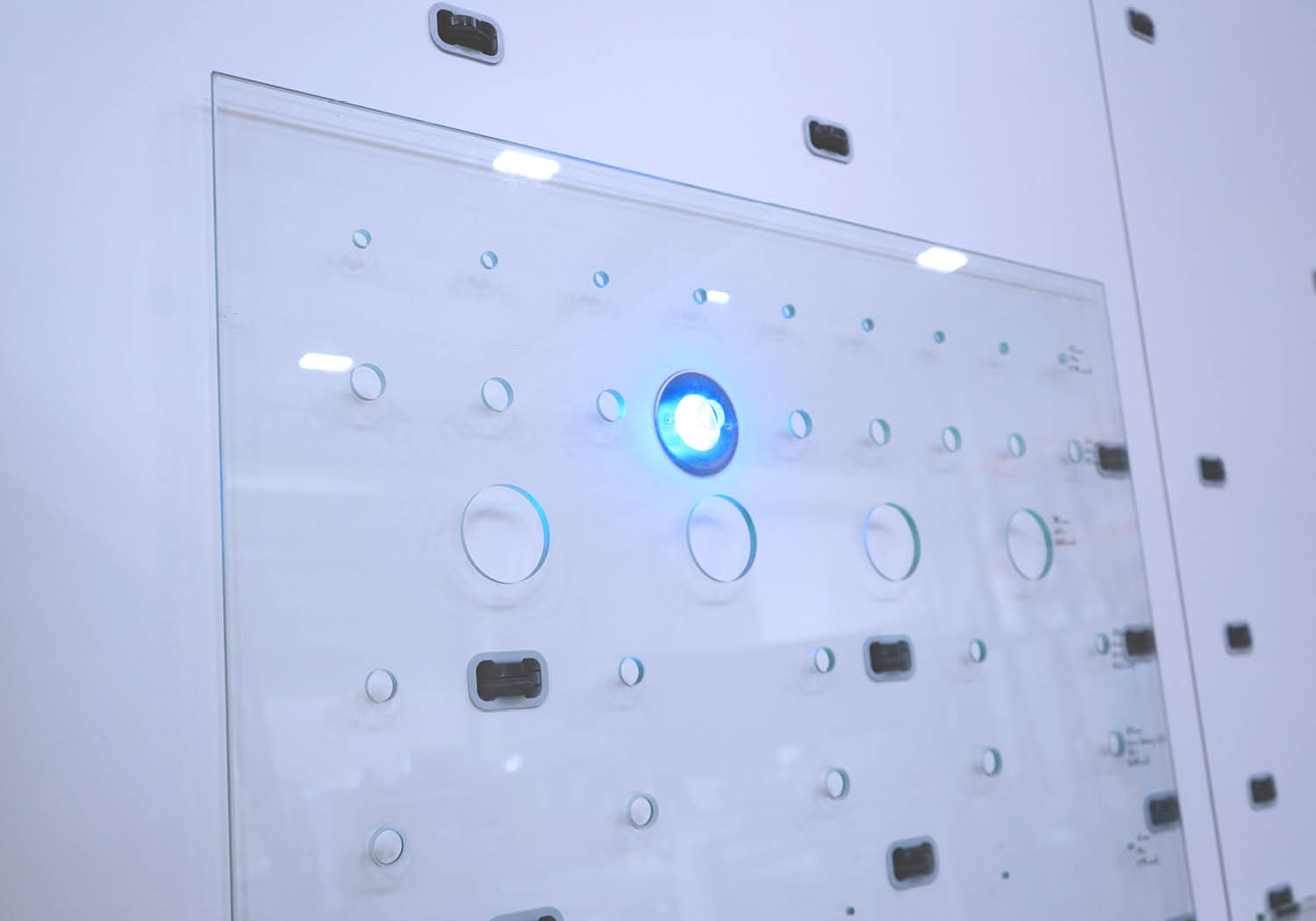
What Is Helix Drilling in Glass Processing?

In conventional drilling systems, the tool moves directly into the glass while the workpiece is mechanically clamped. The hole diameter always corresponds to the diameter of the drilling tool.

The systron approach is different.

  • The glass is moved in a controlled manner using the X and Y axes.
  • These coordinated movements create a circular motion between the tool and the glass, generating the required hole diameter.
  • The additional movement of the tool along the Z axis creates the Helix motion.

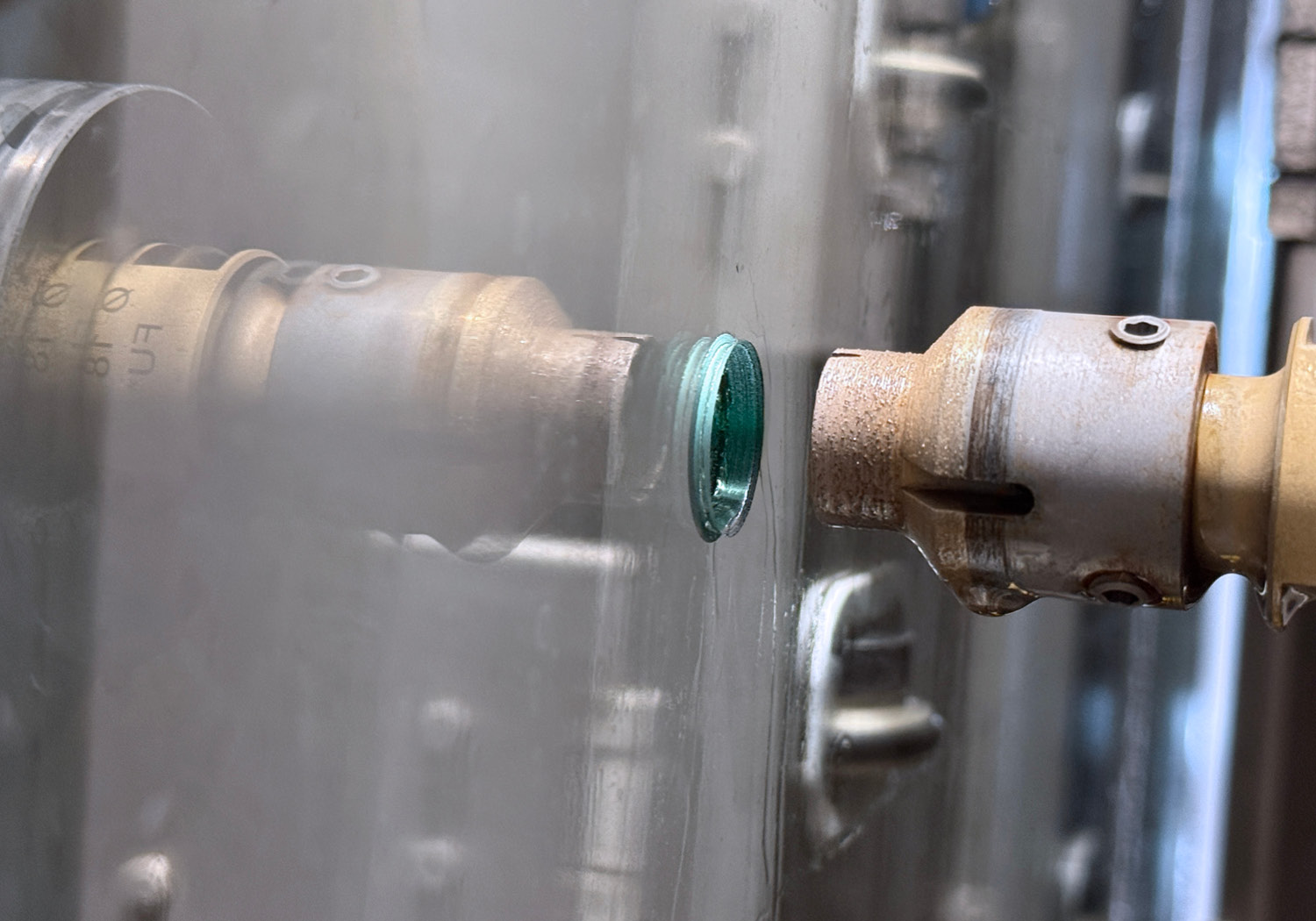
For example, an 18 mm drill can produce a standard 19 mm hole, a special diameter of 19.35 mm or even a 22 mm hole without changing the tool.

This results in a much more flexible drilling process, improved cooling conditions and significantly longer tool life.

Patented Water Cushion Technology with Floating Glass Clamping

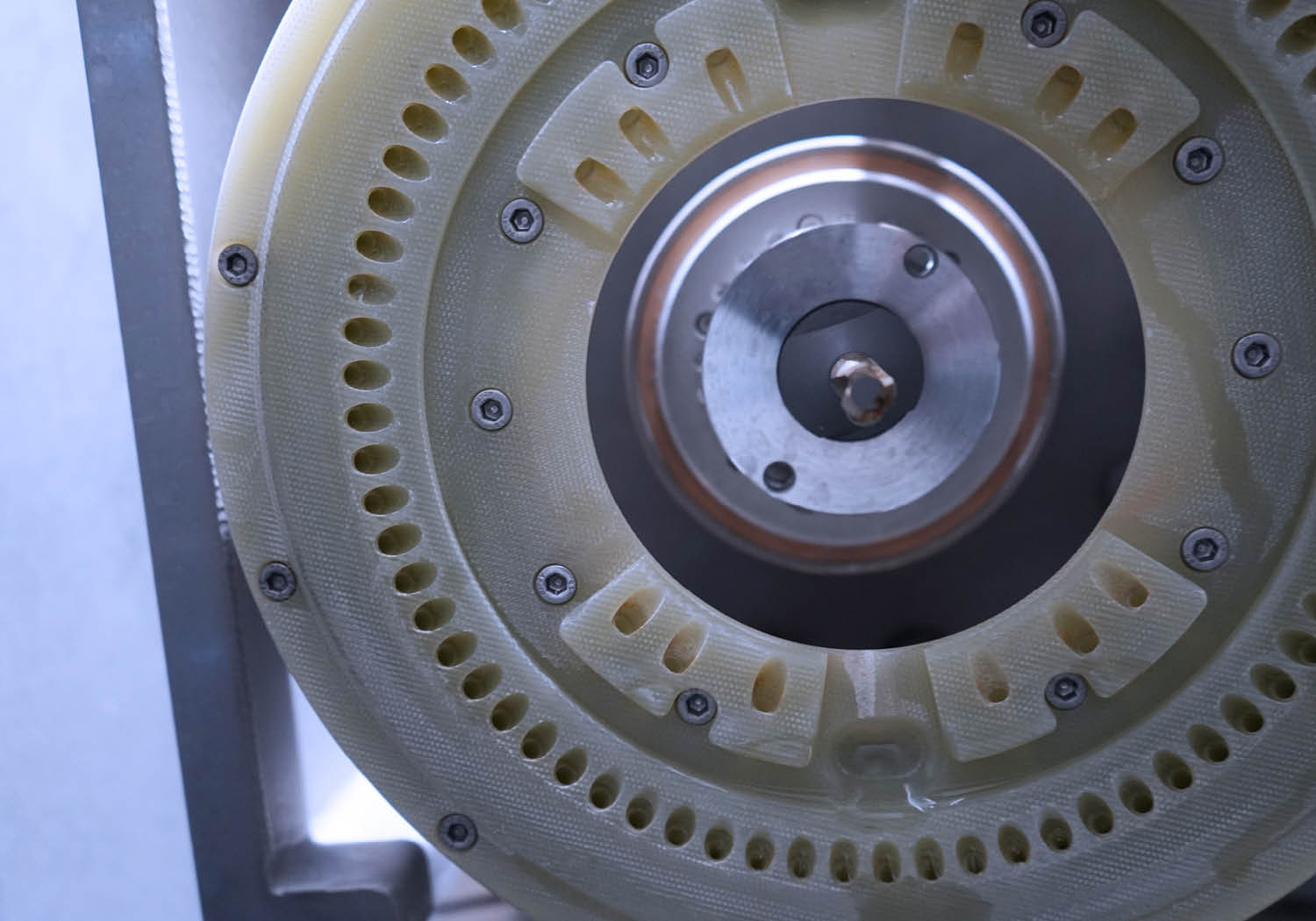
The patented systron Water Cushion stabilises the glass pane on a thin water film and provides floating glass clamping. This allows the glass to remain sufficiently movable during machining while maintaining stable support throughout the entire process.

The Water Cushion performs several functions simultaneously:

  • Contact-free support for sensitive glass surfaces
  • Vibration damping
  • Glass stabilisation during machining
  • Continuous tool cooling
  • Permanent edge parallelism without operator influence

The Water Cushion continuously follows the glass surface and provides uniform support throughout the machining process. The benefits include:

  • Higher process reliability
  • More stable machining conditions
  • Lower risk of glass breakage
  • Longer tool life

The technology is particularly advantageous when machining laminated glass, thick glass, coated glass, complex glass shapes and ceramics.

Why Helix Drilling Is Especially Important for Laminated Glass

Heat generation is one of the main challenges when drilling laminated glass. Many conventional systems require multiple drilling steps, cooling pauses or reduced feed rates to prevent excessive thermal loading. Helix Drilling Technology offers a different approach. It enables:

  • Continuous drilling in a fully automated process
  • Process water supplied directly into the machining zone
  • Improved heat dissipation
  • Lower mechanical stress

The larger gap created between the tool and the glass during the Helix motion allows a higher flow of cooling water. As a result, process heat and machining debris are removed more efficiently from the machining zone, improving process stability while reducing tool wear.

Oscillating Milling for Longer Tool Life

systron also takes a different approach to milling. While Helix Drilling is used to produce flexible hole diameters, Oscillating Milling is designed to distribute tool wear more evenly.

Instead of operating with a constant linear feed, the system uses an adaptive feed strategy during oscillation. At the same time, machining positions are stored intelligently, ensuring that the tool is not continuously loaded at the same contact point. The result is:

  • Longer tool life
  • More stable and efficient machining processes
  • Consistently high machining quality with reduced tool wear

This technology offers significant advantages over conventional rigid milling processes, particularly when machining complex contours and demanding glass geometries.

Optimised Internal Cooling for Stable Machining Processes

An essential part of the systron Helix Drilling and Oscillating Milling concept is the integrated internal cooling system.

Process water is delivered directly into the active machining zone, cooling both the tool and the workpiece exactly where heat is generated during drilling and milling.

This improves debris removal, reduces thermal loading and supports a stable machining process throughout longer production cycles.

Internal cooling operates only while machining is active, making the system highly resource-efficient. With a fresh water consumption of approximately 1.2 litres per minute, around 100 litres of fresh water are required for approximately 300 drilling operations.

Why the systron Machining Concept Is Different

Unlike conventional machining systems with rigid mechanical clamping, the systron proMD combines several technologies within a single machining concept:

  • Conventional drilling
  • Helix Drilling Technology
  • Oscillating Milling
  • Patented Water Cushion Technology
  • Floating glass clamping
  • Internal cooling
  • Front and rear machining spindles for double-sided drilling and countersinking

The combination of Helix Drilling Technology and the patented Water Cushion Technology is a unique feature of the systron proMD and forms the foundation for its high process reliability, machining flexibility and long tool life.

FAQ

During Helix Drilling, the tool follows a helical toolpath = the Helix motion. This allows different hole diameters to be produced with the same tool while improving cooling and the removal of machining debris.

The Helix motion improves heat dissipation and reduces mechanical load on the tool. As a result, machining conditions become more stable when processing laminated glass.

The patented Water Cushion Technology stabilises the glass pane on a thin water film and enables floating glass clamping. This reduces vibrations and increases process reliability.

During Oscillating Milling, the load is distributed across a larger area of the tool. In addition to the actual milling movement, the tool performs controlled compensating movements. This prevents continuous loading of the same area of the tool, reducing tool wear, extending tool life and ensuring consistently high machining quality.

During Helix Drilling, the tool follows a helical toolpath. This allows different hole diameters to be produced with the same tool while improving cooling and the removal of machining debris.

During Oscillating Milling, the tool performs additional compensating movements. This distributes the load across a larger area of the tool, reducing wear and extending tool life.

While the Helix motion is primarily used to produce hole diameters with greater flexibility and process reliability, Oscillating Milling optimises the milling process by distributing tool wear more evenly.

During Helix Drilling, the tool feeds simultaneously in the Z-axis while the glass is moved in the X and Y axes along a circular path. This generates the required hole diameter.

During Oscillating Milling, the tool follows the programmed milling contour while additionally performing small compensating movements in the Z-axis. This prevents continuous loading of the same area of the tool, reducing wear and extending tool life.

The minimum hole diameter depends on the tool being used.

Hole diameters of up to 100 mm can be produced directly. For larger diameters, milling is generally the more efficient solution. Alternatively, large openings and complex contours can be produced using the optional waterjet system.

Share on Social Media